People assume the answer to fear is courage. It is the thing you get told: be brave, feel the fear and do it anyway, face your fears. I have stood at the edge of a lot of cold, dark water, and I can tell you that courage has almost never been the thing that got me in.
Fear is not a fact. Fear is an emotion.
That distinction sounds small and it is not. A fact is something true about the world. An emotion is something true about you, in a moment - and emotions are not reliable reporters. Fear in particular is a terrible reporter. It is a primal system that has not evolved at anything like the rate the rest of our lives have. It cannot tell the difference between a predator and a board meeting, so it treats both as fatal and advises retreat in both cases.
And it is wrong most of the time. Ninety percent of what we fear never happens. The ten percent that does, we handle - because handling things is what we are built for.
So if fear is an emotion, arguing with it emotionally is a losing strategy. You cannot out-feel a feeling. What works is coming at it from the other direction entirely.
The opposite of fear is not courage or bravery. The opposite of fear is logic, rational thinking, and - most importantly - discipline.
I used to think discipline meant force. Making yourself do the thing. Gritting your teeth at four in the morning. That is part of it, but it is the least interesting part, and it is not why discipline works.
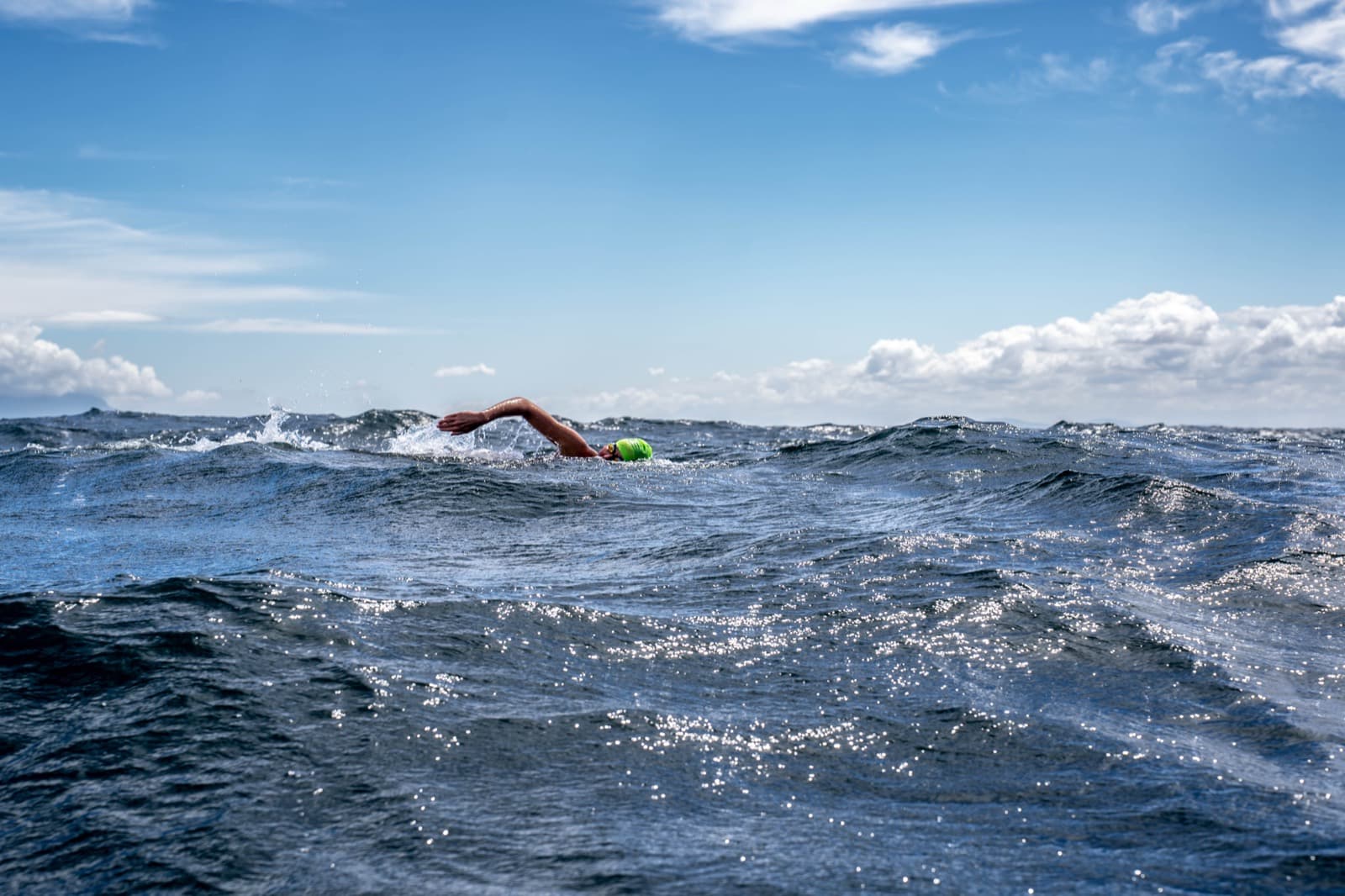
When I stand at the water's edge before a thirty-four kilometre swim, my mind cannot process thirty-four kilometres. Nobody's can. It is too big and too unknown, and the unknown is exactly where fear does its best work. But I can process five kilometres, because I have swum five kilometres several hundred times. I know precisely what it costs. And if I can do five, I can do five again - that is ten. Another five is fifteen, which is nearly half.
The distance did not change. What changed is that I broke it into units I had evidence about.
That evidence is the whole thing. Every unremarkable training swim, every session nobody watched and nobody applauded, was not really about fitness. It was about building a record of myself keeping my own commitments. By the time I get in the water, I am not hoping I will keep going. I have hundreds of data points telling me I will.
Which is why I now think discipline has almost nothing to do with force, and almost everything to do with trust.
Through discipline, we allow ourselves to trust the unknown - because discipline allows us to trust ourselves.
You cannot reason your way into the unknown. There is nothing there to reason about; that is what makes it unknown. The only thing you can carry into it is a reliable assessment of how you behave when things get difficult. And the only way to get that assessment is to have behaved that way, repeatedly, when it did not matter and nobody was watching.
This is why I am suspicious when people tell me they are waiting to feel ready. Readiness is not a feeling that arrives. It is a conclusion you draw from evidence you have gathered about yourself.
Fear will still come. Mine still does, every time, and I have been doing this for twenty years. It comes and says exactly what it always says: it is too far, it is too cold, you cannot do this.
And discipline answers the way it always answers. Not with courage. With the next stroke.
Bring Carina to your stage.