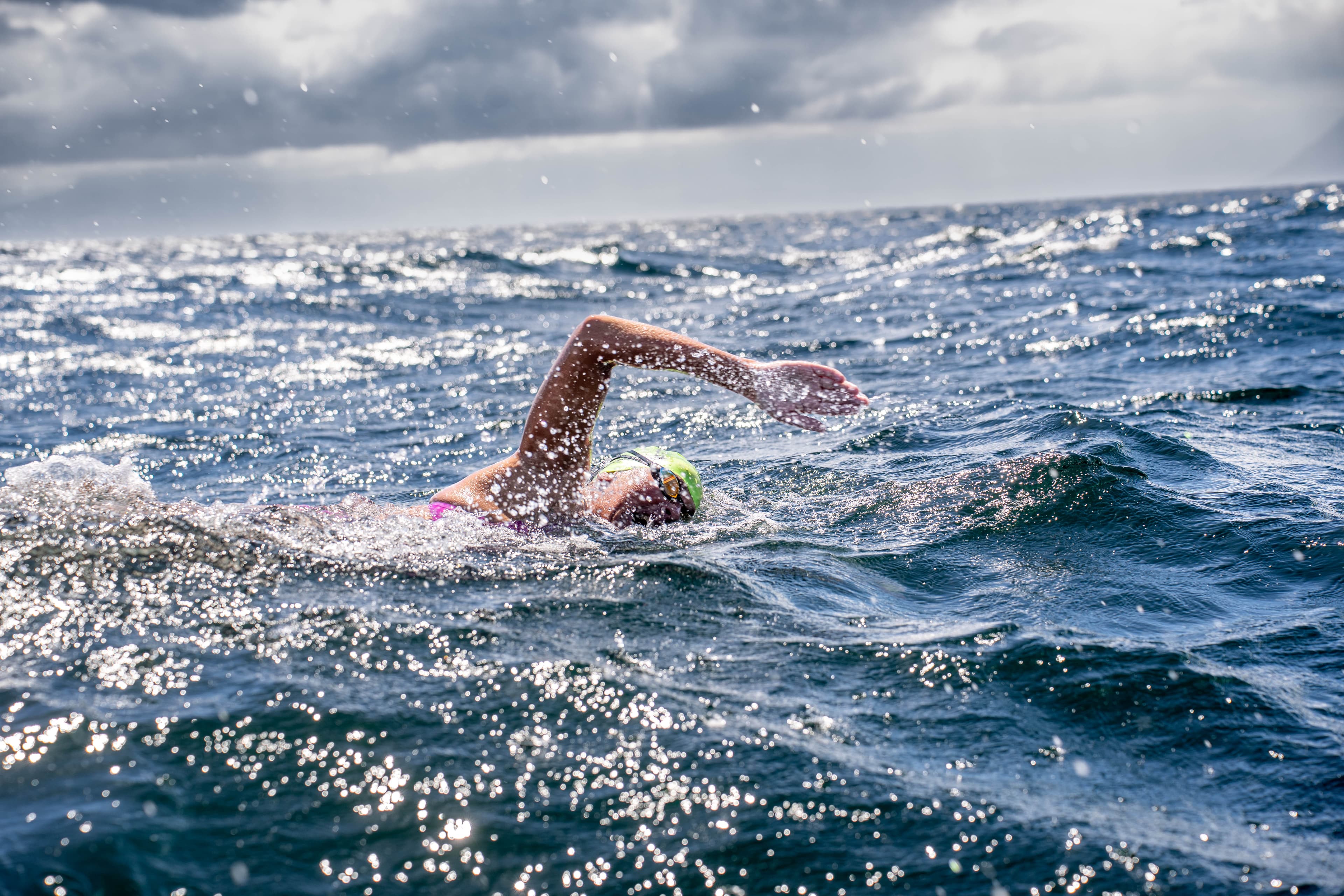
Twenty years ago I crossed False Bay for the first time. Thirty-four kilometres, and it took me two attempts. The first one ended with me unconscious on the deck of a support boat.
This year I went back.
Not for the crossing - I had done that. I went back for the record. I had spent months training for a sub-eight-hour swim and I believed I could do it. We waited weeks for the right conditions: wind direction, swell, water temperature. Open-water swimming is mostly waiting. You do not choose your day. The ocean offers you one.
At the halfway mark I was ahead of schedule. I was flying. Everything I had planned for was working exactly as I had planned it.
Then the storm arrived early.
The forecast had been wrong, which forecasts sometimes are. The swell built to two metres. The support boat was lifting metres above me and dropping away again. Every stroke I took was being taken in water moving in a direction I had not agreed to.
And somewhere in there, the swim I had trained for stopped existing.
That is the part I have thought about most since. Not the storm - storms are ordinary. What I keep returning to is the specific moment when I understood the goal was gone, and that I still had hours of swimming in front of me.
There are only two things you can do there. You can keep swimming the race you planned, which in those conditions means swimming badly - burning what you have left chasing a number the ocean has already taken off the table. Or you can change the goal while you are still inside it.
I changed the goal. It stopped being about the time and became about managing the moment. One stroke at a time. Staying steady, staying present, adjusting to the water rather than fighting it.
I finished in nine hours and forty-five minutes. Short of the record. Short of what I had trained for, and short of what I had told people I was going to do.
I am not going to pretend that felt good.
But here is what I have come to think. In business we are taught that changing the goal is a failure of nerve. We call it moving the goalposts. We treat the original target as the honourable thing and any revision as a retreat - so people keep executing plans the conditions have already invalidated, and they burn their teams doing it.
That is not discipline. That is difficulty accepting new information.
The discipline is in the distinction: knowing whether a goal has become genuinely impossible, or whether it has merely become hard. Those are not the same thing, and confusing them is expensive in both directions. Abandon a goal that was only hard and you have quit. Cling to one that has become impossible and you waste everything you had left - and you take your people with you.
You do not get to choose the conditions. You can choose your response. But the ocean sets the terms. Always.
What I know now is that finishing in changed conditions, to a standard I set mid-swim, was harder than the eight-hour swim would have been. Nobody claps for that. There is no record for it. It does not appear in a results table anywhere.
And I plan to go back.
Bring Carina to your stage.