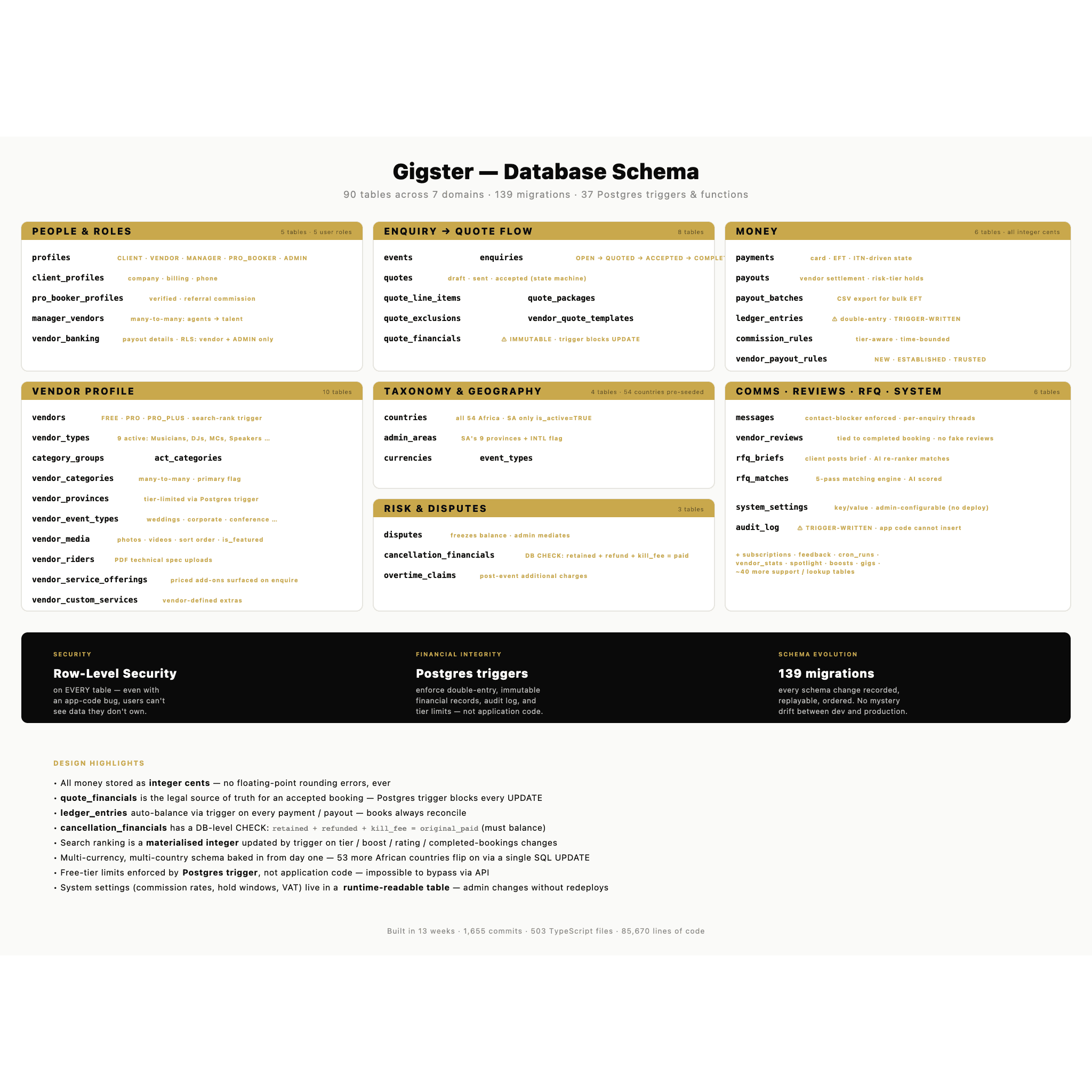
Here is something I find genuinely ironic. For several years, I ran a technology business without really understanding technology. Gigster is a marketplace connecting entertainers, speakers and event professionals with clients. It has always been a platform - a piece of software that other people use. But if you had asked me to explain how it actually worked, I would have struggled.
That was fine, until it wasn't. The platform needed to be rebuilt - user expectations had shifted, the technology had dated and competitors were moving. Rebuilding something like Gigster at the scale required would traditionally have meant a development team, a substantial budget and a level of technical fluency I simply didn't have. As a non-technical founder, the assumption was that I would describe what I wanted and someone else would build it.
Then AI arrived, and that assumption started to break. I underestimated it at first - most people do. I thought of it as a writing tool, useful for drafts and summaries but peripheral to the real work of building something. That was wrong. What started as curiosity quickly became an obsession. I began spending hours inside these tools - exploring how software products are structured, how databases work, how user journeys are designed and how workflows can be automated. The more I learned, the more I realised that the traditional line between technical and non-technical people wasn't as fixed as I had always assumed.
I wasn't suddenly a software engineer. I wasn't writing code from scratch. But for the first time, I could actually participate in the process - test ideas, build prototypes, evaluate solutions and have conversations about technology that meant something, rather than nodding along and hoping for the best. Gigster was rebuilt from the ground up - and is still being built, because the best platforms always are. There were iterations, dead ends, redesigns and moments of genuine frustration. Features that seemed brilliant turned out not to work. Assumptions were tested and often discarded.
What surprised me most, though, wasn't the technology - it was the psychology. I had spent years speaking about resilience, adaptability and the importance of stepping outside your comfort zone. In that rebuild, I lived those lessons again in a context I hadn't expected. I was a beginner again - not on a stage, not in the ocean, not in a rehearsal room, but in technology. And beginners ask different questions. They make different kinds of mistakes. They approach problems without the assumptions that expertise can accidentally install. There is something genuinely useful in that.
What I think AI has changed, more than anything else, is access - not access to instant expertise, but access to possibility. More people can now engage with complex problems, test ideas and contribute to building things that would previously have been beyond their reach. That doesn't eliminate the need for skilled developers and technical thinkers. The best ones remain extraordinarily valuable. But it does change who gets to enter the conversation. And sometimes the most useful person in that conversation is the one who doesn't yet know what can't be done.
Bring Carina to your stage.