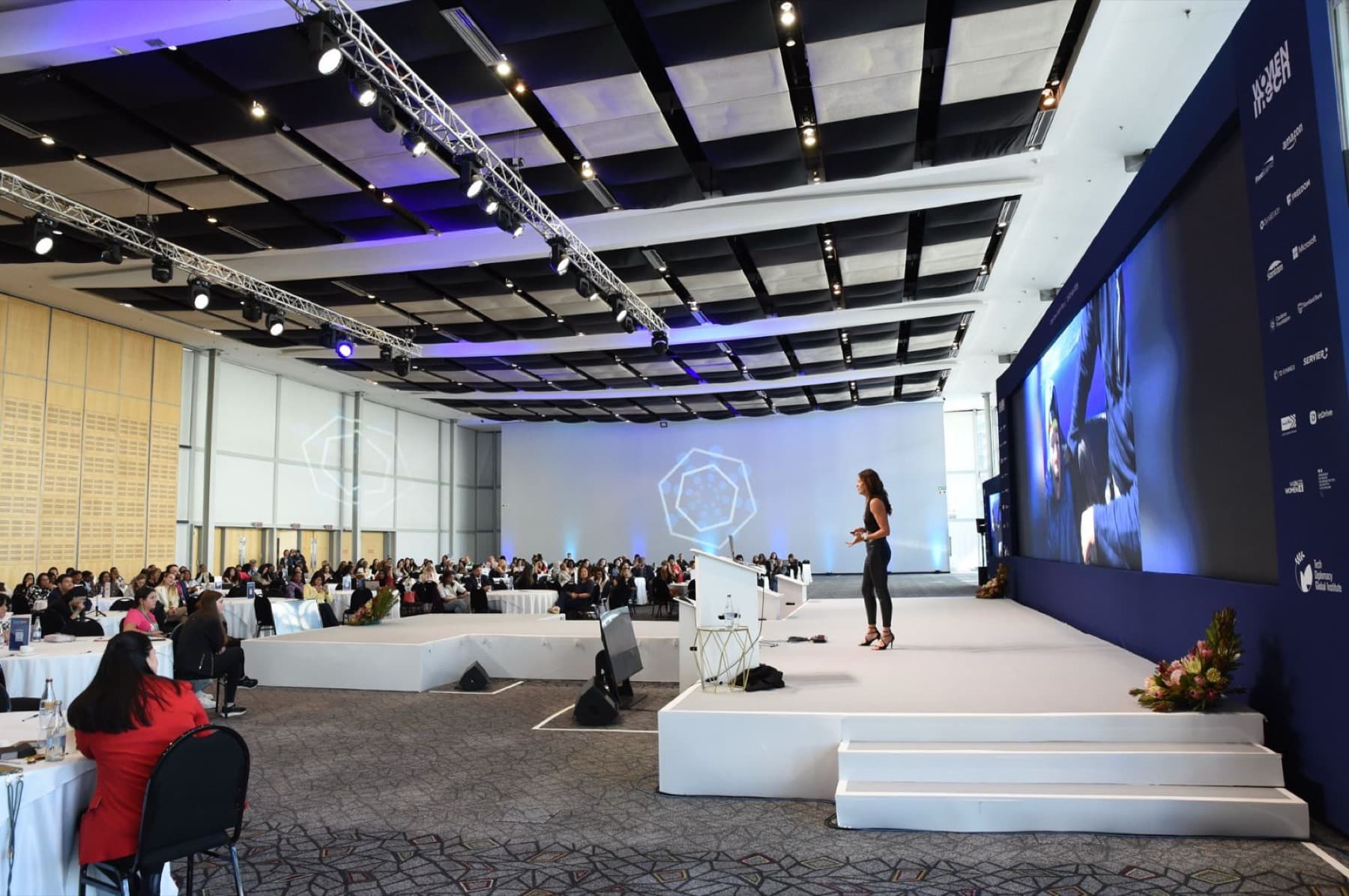
Your keynote speaker is the single biggest variable in how your event is remembered. Get it right, and delegates quote the talk for months. Get it wrong, and the most expensive hour on your programme becomes the one everyone scrolls their phone through.
Having sat on both sides of this decision — as a speaker, and as someone who has spent two decades in the events industry — here is the advice I'd give any event planner choosing a keynote speaker.
Start with the outcome, not the speaker
Before you look at a single showreel, write down one sentence: "When the keynote ends, I want our audience to ______." Feel re-energised after a hard year? Embrace a restructure? Walk into a sales year with courage? Think differently about AI?
That sentence is your real brief. A famous name who doesn't serve it will underperform an unknown who does. Every other decision — topic, style, budget — flows from it.
Lived story beats borrowed theory
Audiences in 2026 are saturated with content. They can get frameworks from a podcast at double speed. What they cannot get anywhere else is the credibility of a person who has actually lived the message standing in front of them.
So interrogate the source of the speaker's material. Is the resilience talk built on something real — expeditions, championships, businesses built and lost — or assembled from other people's research? The difference is audible in the first five minutes, and audiences feel it before they can name it.
Demand evidence, not adjectives
Every speaker's website says "inspiring" and "engaging". Look past the adjectives for evidence:
- Video of a real keynote — not just a polished sizzle reel. Watch two minutes of an actual talk: is the room with them?
- Named testimonials from organisations like yours, with real people attached — not anonymous praise.
- Case studies that describe the brief, what was delivered and what changed. A speaker who can show the before-and-after of past events has nothing to hide.
- Independent signals — Google reviews, press coverage, repeat bookings. One client booking a speaker twice within weeks says more than any quote.
Tailoring is the whole game
Ask every shortlisted speaker one question: "How will you adapt this keynote for our audience?" Then listen carefully.
A professional will ask about your industry, your theme, your audience's year, what should change by Monday morning. A red flag is a speaker who pivots straight to logistics — it usually means the same talk, every time, with your logo on slide one. The best keynotes quote the audience's world back at them: their pressures, their language, their moment.
Practical filters that save you pain
- Budget honestly. A keynote fee buys preparation, tailoring and twenty years of stagecraft — not just an hour. If the budget is tight, a virtual keynote from a stronger speaker often beats an in-person talk from a weaker one.
- Check the format fit. A 2,000-seat arena energiser may flatten in a 40-person executive retreat — and vice versa. Ask what room sizes the speaker works best in, and look for proof of both.
- Ask about the extras. Q&A moderation, a workshop after the keynote, MC duties, a performance element — many speakers offer far more value than the keynote slot alone.
- Test responsiveness. How a speaker (or their team) handles your enquiry is a preview of how they'll handle your event. Slow, vague replies now mean stress in event week.
The shortlist conversation
When you're down to two or three names, get each on a call. You're listening for three things: genuine curiosity about your audience, specific ideas rather than generic promises, and the feeling that this person will care about your event as much as you do.
Trust that instinct. Your delegates will feel exactly what you feel on that call — amplified by a stage, a spotlight and a thousand expectations.
Carina Bruwer is a motivational keynote speaker based in Cape Town and booked worldwide. The best way to evaluate her for your event is the same advice given above: watch her speak, read the case studies, and start a conversation.
Bring Carina to your stage.